
Lit AI Inc Magazine: Understanding the Expanding Role of Artificial Intelligence
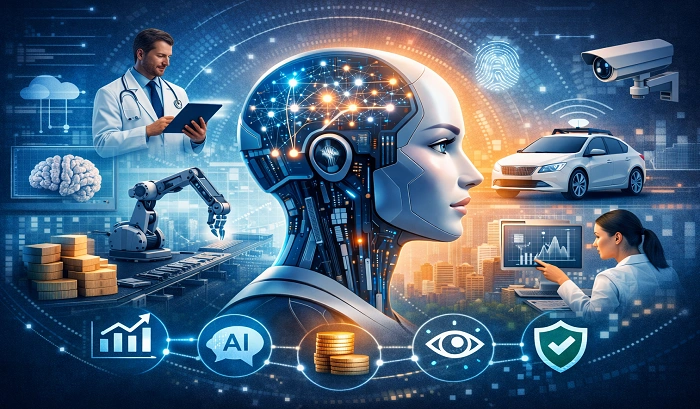
- 330 Views
- DiscoverNews Editorial Team
- December 11, 2024
- Business
Artificial intelligence (AI) has evolved from a theoretical concept into a practical technology influencing nearly every sector of the global economy. From healthcare diagnostics to financial fraud detection, AI systems now support complex decision-making, automate repetitive tasks, and enhance productivity at scale.
Lit AI Inc Magazine examines how artificial intelligence is currently shaping industries, the technological foundations behind its growth, and the ethical responsibilities that accompany its rapid expansion.
Table of Contents
ToggleWhat Is Artificial Intelligence?
Artificial intelligence refers to computer systems designed to perform tasks that typically require human intelligence. These tasks include learning from data, recognizing patterns, understanding language, solving problems, and making predictions.
AI development relies on several core technologies:
- Machine Learning (ML) – Algorithms that learn from data without explicit programming
- Deep Learning – Neural network systems inspired by the human brain
- Natural Language Processing (NLP) – Technology enabling machines to understand and generate human language
- Computer Vision – System interpretation for visual data, including pictures and videos
Organizations such as OpenAI, Google DeepMind, and IBM have played significant roles in advancing these technologies through research and large-scale AI deployments.
Current State of AI Technology
Today’s AI systems are more powerful, scalable, and accessible than ever before. Cloud computing infrastructure and large datasets have accelerated AI development across industries.
Advanced Language Models
Large language models can now generate coherent text, summarize complex documents, translate languages, and assist with research. These systems are widely used in business communication, customer service automation, and educational support.
Computer Vision Applications
AI-powered image recognition tools assist in:
- Medical imaging analysis
- Security and surveillance
- Autonomous vehicles
- Manufacturing quality control
These systems process visual information faster and often more consistently than manual inspection methods.
Automation and Decision Support
AI supports business intelligence by analyzing large datasets and identifying trends. Predictive systems help organizations anticipate customer behavior, manage risk, and optimize supply chains.
While these advancements are impressive, AI systems still depend heavily on high-quality data and human oversight. Errors, bias, and overreliance on automation remain concerns that must be carefully managed.
Advancements in Machine Learning
Machine learning continues to expand the boundaries of what AI systems can accomplish.
Deep Learning Breakthroughs
Deep neural networks have dramatically improved:
- Speech recognition accuracy
- Image classification precision
- Real-time translation capabilities
- Personalized recommendation systems
These systems learn complex relationships within data layers, enabling more nuanced predictions.
Generative AI
Generative AI creates new content, such as writing, photos, music, and code. Businesses use generative tools to:
- Draft marketing copy
- Develop design concepts
- Generate software code
- Create educational materials
Although powerful, generative AI outputs require human review to ensure factual accuracy and ethical use.
Predictive Analytics
Predictive models analyze historical patterns to forecast future outcomes. Industries rely on predictive analytics for:
- Sales forecasting
- Demand planning
- Healthcare risk assessment
- Financial risk modeling
As computational capabilities grow, predictive systems become increasingly precise and adaptable.
Impact of Artificial Intelligence Across Industries
AI adoption varies by industry, but its influence is widespread.
Healthcare
AI tools support early disease detection, diagnostic imaging, and personalized treatment planning. Algorithms analyze patient data to assist clinicians in making faster and more informed decisions. AI also accelerates pharmaceutical research and drug discovery.
Finance
Financial institutions deploy AI for fraud detection, algorithmic trading, credit scoring, and risk management. Machine learning systems monitor transactions in real time, identifying irregular patterns that may indicate fraudulent activity.
Manufacturing
AI-driven robotics improve efficiency in production environments. Automated systems handle repetitive and high-precision tasks, reducing operational errors while increasing output consistency.
Retail and E-Commerce
Recommendation engines personalize customer experiences by analyzing browsing behavior and purchase history. AI helps retailers manage inventory, forecast demand, and optimize pricing strategies.
Education
AI-powered learning platforms adapt to individual student performance. Personalized content delivery enhances engagement while analytics help educators identify learning gaps.
Ethical Considerations in AI Development
As artificial intelligence becomes more integrated into daily life, ethical concerns require serious attention.
Algorithmic Bias
AI systems learn from training data. The technology may generate unfair results if the data contains bias. Developers must implement diverse datasets and conduct regular audits to reduce discriminatory effects.
Data Privacy
AI relies heavily on data collection. Transparent data policies and strong cybersecurity practices are essential to protect user information. Compliance with privacy regulations strengthens public trust.
Transparency and Explainability
Understanding how AI systems reach decisions is particularly important in sensitive areas like healthcare, hiring, and finance. Explainable AI models aim to provide clearer reasoning behind automated outputs.
Regulatory Developments
Governments worldwide are developing regulatory frameworks to ensure responsible AI usage. The challenge lies in balancing innovation with consumer protection and ethical standards.
AI and the Future Workforce
Artificial intelligence is reshaping labor markets. While automation may reduce certain repetitive roles, it also creates demand for new skills, including:
- Data science
- Machine learning engineering
- AI governance and ethics
- Cybersecurity
- Human-AI collaboration management
Organizations increasingly invest in workforce training programs to help employees adapt to AI-enhanced operations. Continuous education is becoming essential in a technology-driven environment.
Opportunities and Limitations of AI
AI presents substantial opportunities:
- Increased operational efficiency
- Enhanced decision-making accuracy
- Personalized customer experiences
- Improved healthcare outcomes
However, limitations remain:
- Dependence on high-quality data
- Risk of misinformation from generative tools
- Cybersecurity vulnerabilities
- Ethical and regulatory uncertainty
Recognizing both strengths and limitations ensures balanced and responsible adoption.
The Road Ahead for Artificial Intelligence
Artificial intelligence continues to evolve rapidly. Future developments are expected to focus on:
- More context-aware conversational systems
- Enhanced human-AI collaboration tools
- Stronger ethical governance standards
- Improved model transparency
- Sustainable AI infrastructure
Businesses that strategically integrate AI while maintaining responsible oversight will be better positioned to succeed. At the same time, individuals who develop digital literacy skills will benefit from emerging opportunities.
Conclusion
Artificial intelligence is transforming industries, redefining workflows, and expanding the boundaries of technological innovation. From healthcare and finance to education and manufacturing, AI systems provide measurable efficiency gains and improved decision support.
However, sustainable progress requires thoughtful implementation. Addressing concerns around bias, privacy, and transparency is essential to maintaining public trust.
Lit AI Inc Magazine remains committed to delivering research-based, balanced coverage of artificial intelligence developments. By combining innovation with responsibility, society can harness AI’s potential while protecting ethical standards and human values.
The Discover News Editorial Team publishes original, research-based content across business, digital marketing, home improvement, lifestyle, and general news. Articles are written, edited, and reviewed with a focus on accuracy, clarity, relevance, and reader value, and are intended for general informational purposes only.